Sep 24, 2026
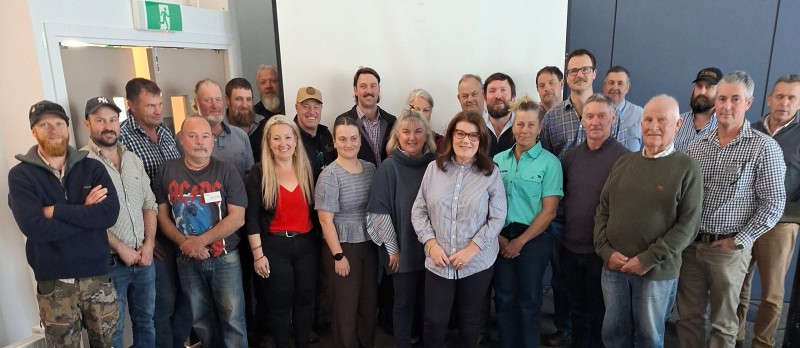
NZDFA Executive Committee and Branch Chairs
There was an engaged and engaging lineup at this year’s NZDFA Branch Chairs meeting in Wellington. From new initiatives to the burning issues of the day, there was plenty to discuss. The meeting also saw three New Faces attend, from the South Canterbury/North Otago, Hawke's Bay and Marlborough branches, respectively.
One exciting development was presented by NZDFA Executive members Tom Macfarlane and Richard Greer, who introduced an Extension Programme proposal. The goal, based on the Beef + Lamb NZ model, would be to bridge the gap between research and farmer uptake, using the DFA branch network to roll out various information-sharing forums, coordinated by an Industry Extension Manager. Initial feedback was supportive, and DFA chairs were asked to gauge support at a branch level.
An overview of the Thrive 35 industry strategy by DINZ Chief Executive Rhys Griffiths gave branch chairs the need-to-know details of the new Thrive 35 Accelerator programme, a market-led, science-driven initiative that will help the industry's ambitious goal of doubling export value to $660 million by 2035. The programme is built around three work streams and activities aimed at: building premium product pathways; promoting health and functional properties with evidence-based research; and building the integrity and robustness of domestic supply chains.
The Thrive 35 Accelerator programme, using around 16 percent of grower levies, was a great initiative, NZDFA Executive Chair Evan Potter said.
“The question is will the benefits trickle down to farmers and deliver them greater value.”
Given the time of year and the last couple of seasons, velvet was always going to be a topic of much interest.
The DFA chairs were anxious about the 2026/27 season, and while DINZ Board member Tony Cochrane said, "extra competition could be disruptive and not always creating value," he added that prices would definitely be lifting.
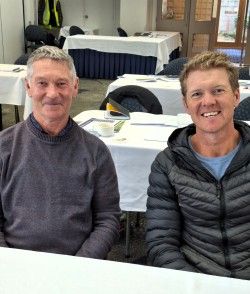
New Faces Murray Elwood (left), Marlborough, and Harry Gaddum, Hawke's Bay.
DINZ Quality Assurance Manager Merryn Pugh said that around 1100 tonnes were declared by exporters last year, but that there could be some trying to cheat the system, putting everyone at risk. Her goal is to map the domestic supply chain to identify all the businesses that had touch points and those who might be stockpiling product.
“Every person who lays hands on velvet needs to add value. Hold your buyers to account and make sure they are VelTrak accredited account owners or work for a company who is,” she said.
The wild deer issue was another topic of note among the chairs.
Branch chairs acknowledged the role that wild deer play in maintaining year-round throughput and employment at venison plants but voiced concerns about the potential reputational impact on the farmed venison supply chain. They wanted the industry’s investment in quality assurance protected and farmed venison clearly differentiated from wild venison. Maintaining that distinction is important to protecting the reputation farmed venison has built for its consistent quality and eating experience, and the qualities that make it such a valued product for chefs in New Zealand and overseas.
The wild deer problem was a complex issue due to the varied opinions of the many stakeholder groups involved, DINZ Chief Executive Rhys Griffiths said. He hoped a recently established Wild Deer Processors group, facilitated by DINZ, would address some of the concerns raised by DFA chairs.
NZDFA chair Evan Potter said everyone across the deer industry needed to be educated and reminded about their obligations around wild deer. For farmers, that meant ticking the correct boxes on legally binding ASD forms.
Central and local government legislation reform over the next three years was also discussed, where more than 100 regional plans will be reduced to 17, shifting greater control toward central government, DINZ Environmental Manager Luka Jansen said in her presentation. She urged farmers to familiarise themselves with the Environmental Code of Practice and to continue demonstrating and explaining good management.
“It’s about protecting our social licence at every opportunity,” she said.
On day two, DINZ Policy and Research Manager Manager Emil Murphy overviewed MPI-led plans for a biosecurity incursion such as foot and mouth disease or chronic wasting disease, emphasising that an important next step was to get deer farmer input on practical management and action at a farm level.
In the final presentation, Research Advisory Panel Chair Danette McKeowen gave an enlightening perspective on the complexities of planning and delivering research around the biological cycles of deer, on a shoestring budget, and in an ever-evolving technology landscape.
In summary, Potter said the annual meeting had been “positive and constructive,” with robust discussion across topical issues.
“No one was left wondering what people were thinking.”